The guide
Four kinds of supplier make video for care homes: your own staff with a phone, a local videographer, a general video production company, and a marketing specialist who works only in care. All four can produce something good, and the right answer depends on what you need the film to do. If you want a record of an event, a phone or a local videographer is enough. If you need a film that helps a family choose your home over the one down the road, you want someone who understands the family as well as the camera.
Updated August 2026
Four routes, none of which fails, each of which stops somewhere. In brief:
The four routes
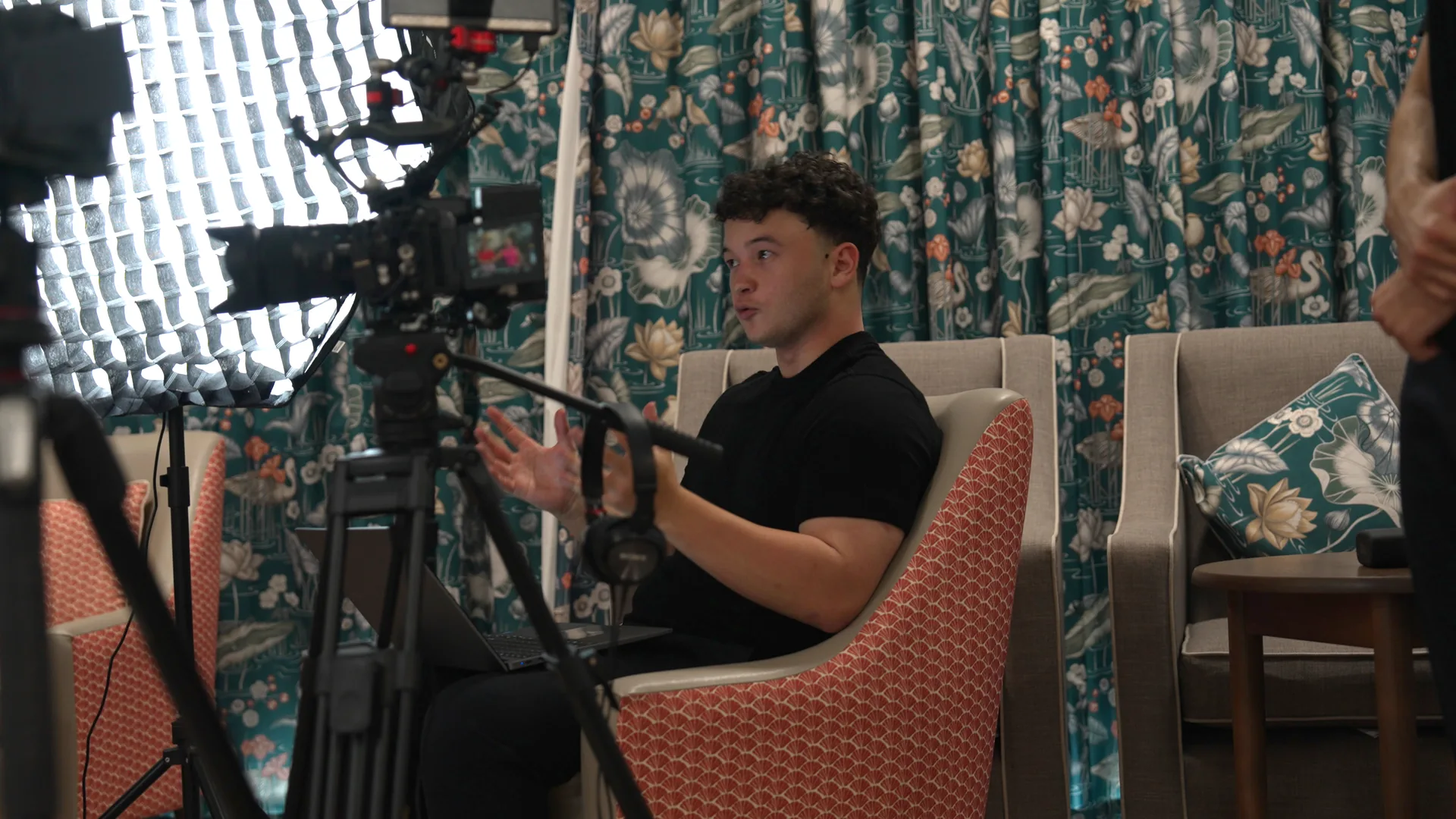
The four routes, in rough order of cost and involvement, are staff with a phone, a local videographer, a general production company, and a care sector specialist. The difference between them is not really picture quality, because most modern kit produces a decent picture.
The difference is how much they know about the people in the room, and what happens to the film after it is handed over. A local videographer will make you a good-looking film. A production company will make you a polished one. The ceiling on both is the same: the film is delivered, and then it is your job to work out what to do with it.
Side by side
Match the route to the job, not to the budget. Most homes end up using more than one over time.
| Route | Good at | Where it stops | Right for |
|---|---|---|---|
| Your own staff on a phone | Everyday moments, speed, no cost, genuine feel. Nothing beats a carer filming a garden party the day it happens | Interviews and sound. Emotional stories need someone outside the home asking the questions, and phone audio in a busy lounge rarely holds up | Ongoing social posts, event coverage, showing daily life week to week |
| A local videographer | A clean, well-shot film for a fair price. Often a one-person operation, flexible, easy to book | Usually delivers the file and stops there. Care-specific knowledge, consent process and capacity questions tend to fall back on you | Open days, recruitment films, a tour of the building |
| A general video production company | Higher production values, larger crew, brand films, multi-site work | Cost rises with crew size, and a big crew disrupts a working home. Their instinct is often a polished brand film, which is the wrong shape for a family in distress | Groups needing a consistent brand film across several homes |
| A care sector marketing specialist | Knowing what families need to hear, drawing out real stories, filming around care without disrupting it, and having a plan for where the film goes afterwards | A narrower brief. If you want a glossy corporate showreel, this is not what it is for | Homes with beds to fill who need the film to produce enquiries, not just exist |
If you are weighing up the wider question of who to work with, there is a fuller checklist for picking a marketing partner for your home.
What the film is for
The film that helps is the one where a real family member talks about the decision, including the difficult part of it. Families arranging care are not shopping. They are usually a close relative, most often an adult child but frequently a spouse, a sibling, a niece or a grandchild, and they are making a decision they did not want to make.
Care England and Log my Care surveyed 1,000 people who had arranged care and found that 97% said they found the process difficult, with over half feeling overwhelmed or unsure where to begin. In the same research, reputation was the highest-weighted factor at 30% and safety and safeguarding second at 29%, while formal inspection reports were named as a key factor by only 11%, and just 19% of families said they used inspection reports at all during their search.
That is what a good film is for. It supplies, in a form a worried relative can absorb in a minute, the reassurance that ratings and brochures do not carry. Two rules follow. The people in the film must be real residents, real families and real staff, never actors and never AI-generated faces. And the piece has to end where families need it to end, on relief that a parent is safe and content, not on guilt about the decision. There is more on whether family testimonial films actually move families to enquire.
Length
Short, at least to begin with. A shoot day should produce more than one thing, because the first film a family meets and the film they watch once they are interested are not the same film.
The film they choose to watch
Longer pieces still have a place further down the decision, once a family is genuinely interested and has clicked through to your own site. Ask any supplier whether a shoot day produces one film or a set of pieces, including clips for social and for your Google Business Profile. It changes the value of the day considerably.
Pricing models
Four pricing models are common, and they are not comparable with each other, so establish which one you are being quoted before you weigh up two prices.
What moves the price, whichever model applies: how many days of filming, how many finished pieces come out of it, whether the supplier also runs the advertising afterwards, and how many sites are involved. Heritage prices its own work by scope and walks the specifics through on a call rather than publishing a rate card, because a single home wanting one family story and a group wanting a rollout across eight homes are different jobs.
Timing
Around six weeks from first conversation to a finished film, and the slow parts are not the filming.
The stage that slips, almost every time. Someone has to be willing to speak on camera, and consent has to be agreed properly and unhurriedly. If you want to move quickly, start this conversation before you book anyone.
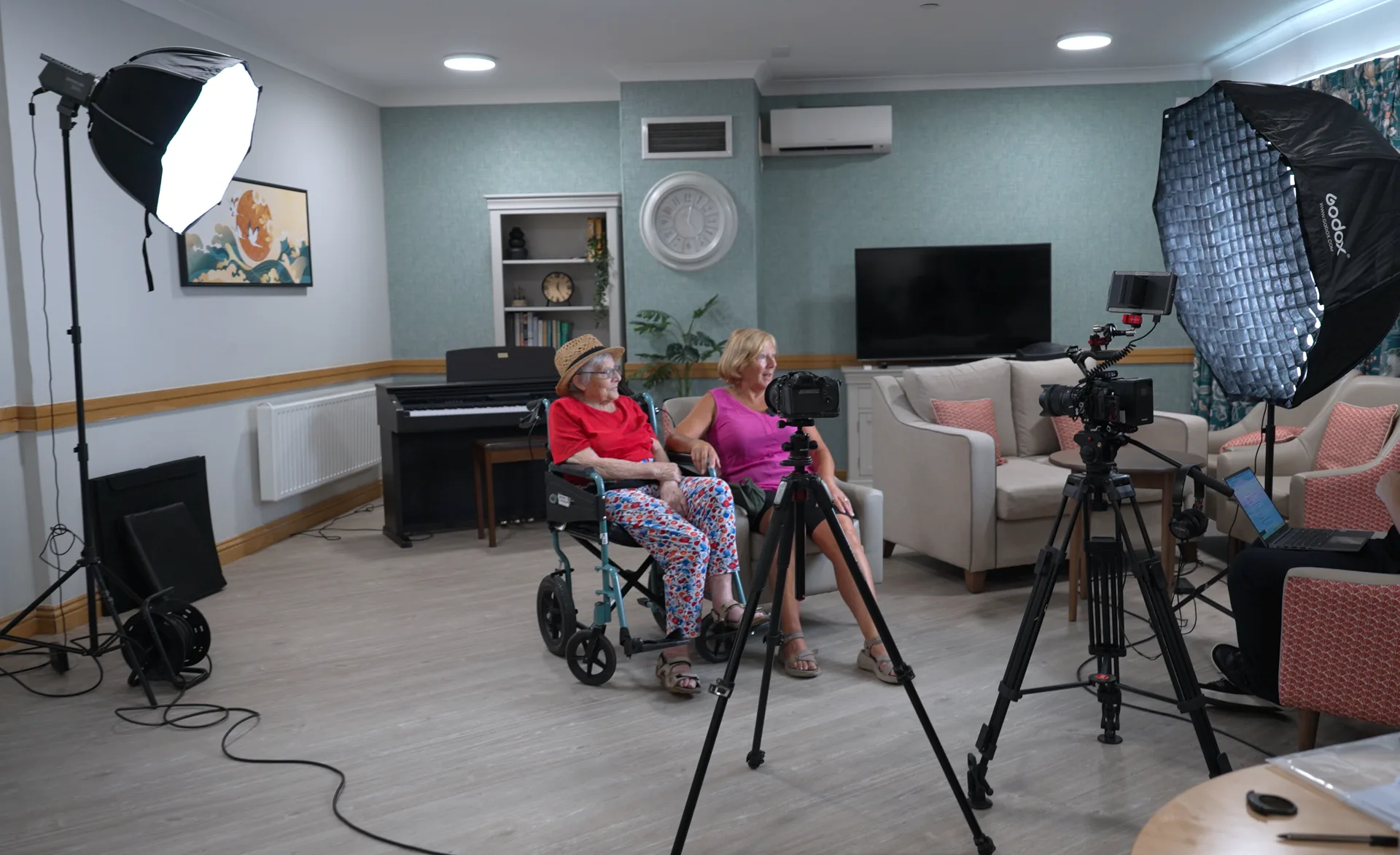
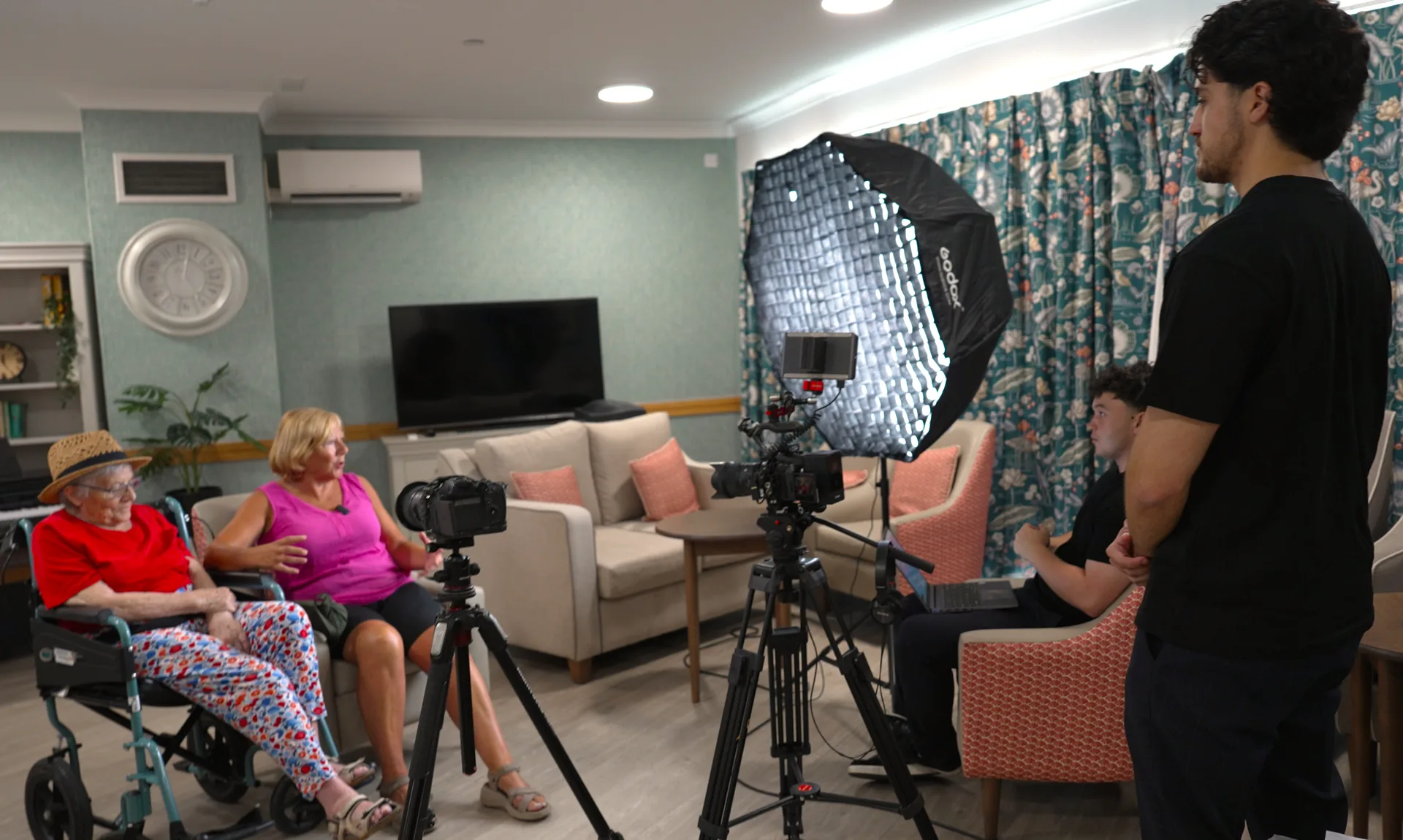
Filming is usually a single day in the home, built around medication rounds, mealtimes and personal care rather than asking those to move. A small crew and real activity, not set-ups that never happen.
Cutting the story, agreeing changes, and producing the set of lengths each placement needs. Agree in advance how many rounds of revisions are included, because that is where project fees quietly stretch.
The risks
Four failures account for most disappointing care home films, and only one of them is about the filming.
Usually caused by scripting people, filming set-ups that never happen, or a crew large enough to make everyone self-conscious. The fix is a small crew, real activity, and questions rather than lines.
A working home has medication rounds, mealtimes and personal care that do not move for a camera. A supplier who has filmed in care builds the day around those. One who has not will ask you to move them.
Anyone recognisable on camera needs to have agreed in writing. Where a resident lacks capacity, the decision follows your usual best interests process, and the safe default is not to film them. Agree this before the shoot, not on the day.
The most common and the most expensive. Before you commission anything, decide where it will live: your enquiry page, your paid social, your Google Business Profile, and your follow-up after a visit. There is a fuller guide to placing a finished film so it actually produces enquiries.
Before you hire
Ask all four routes the same five things, and compare the answers rather than the showreels.
The fifth question is the one that separates the routes. Most suppliers stop at delivery. That is a legitimate way to work, and it is worth knowing before you sign rather than after.
Common questions
Four routes exist: your own staff filming on a phone, a local videographer, a general video production company, and a marketing specialist who works only with care homes. All four can produce something good. They differ in how much they understand about families, residents and the regulator, and in whether anyone is responsible for what happens to the film after it is delivered.
Price depends on the pricing model more than on the film itself. The common models are a day rate, a fixed project fee, a monthly retainer, and a results-based fee tied to move-ins. A day rate buys you time on site. A project fee buys you a finished film. A results-based fee ties the supplier to whether the film actually fills a bed. Ask which model you are being quoted before you compare any two quotes, because they are not comparable otherwise.
Filming itself is usually one day in the home. The slow parts sit either side of it: agreeing who will appear and getting consent, which can take two to three weeks, and editing and revisions, which usually take two to three weeks after the shoot. Plan on roughly six weeks from first conversation to a finished film you can put in front of families.
Yes. Anyone who appears recognisably on camera needs to have agreed to it, and that agreement needs recording in writing. Where a resident lacks capacity to consent, the decision follows your existing best interests process, and the safe default is not to film them. A supplier who has worked in care will bring this up before you do. A supplier who has not may need you to lead it.
No. A family choosing a home for a parent is looking for evidence that the people in the building are kind. A generated face cannot carry that, and being found out would cost far more trust than the film ever earned. Film real residents, real families and real staff, with their consent.
Keep reading
Why a real family's story earns trust faster than anything else a home can show.
Where the finished film should goFour placements that turn one film into enquiries, and how to cut a single shoot for each.
Showing families daily lifeThe ordinary texture of a day in your home, and why families want to see it before they visit.