The guide
Show families real moments, not marketing: residents mid-activity, staff who know people by name, mealtimes, gardens in use, and the small routines that make up a good day. Share them where families actually look, your website, your Google Business Profile, your reviews and your social pages, and let film carry the moments that photos cannot.
Updated August 2026
Families decide on trust, and trust comes from glimpses of real life. In brief:
Why it matters
Because families decide on trust, and trust is built from glimpses of real life rather than from specifications. In Care England and Log my Care's national study of 1,000 people arranging care for a family member, 97% said they found the process difficult and only 19% used inspection reports such as CQC ratings during their research. Reputation ranked as the single biggest factor in the final decision.
Room counts and facilities lists tell a family what your home has. Daily life tells them what their mum's Tuesday will feel like. Every home says "person-centred care" and "home from home". Almost none of them show it, so the home that does stands out immediately.
It helps to remember who is looking. The decision-maker is usually the adult child, though often another close family member, a spouse, a sibling, a niece or nephew. They are typically researching online, often late in the evening, quietly carrying the weight of it. What settles that person is not a brochure. It is a photograph of a resident laughing at a quiz, taken that week.
Where to show it
Everywhere a family looks before they ever pick up the phone, which is more places than most homes cover. Each channel does a different job.
| Where families look | What daily life looks like there | What it does |
|---|---|---|
| Your website | A news or life page with dated photos of recent activities, and film on the homepage | Proof the home is alive now, not just when the site was built. Worth knowing what a care home website needs to carry that life |
| Google Business Profile | Fresh photos added regularly, posts about recent events | Often the first thing a local family sees, before your website |
| Reviews | Families describing real experiences in their own words | Independent proof; carehome.co.uk alone now holds over 400,000 verified reviews that families read |
| Film | Real residents, staff and families on camera | Carries emotion, sound and story that photos cannot |
| Social pages | Weekly moments, informal and unpolished | Shows consistency; an active page reassures, a dormant one raises questions |
Directories and Google both work as places to be found. Their ceiling is that every profile looks broadly the same, which is exactly why the homes that add genuine daily-life material on their own channels stand apart. If families are struggling to find you at all, start with why families may not be finding your home online first.
What to capture
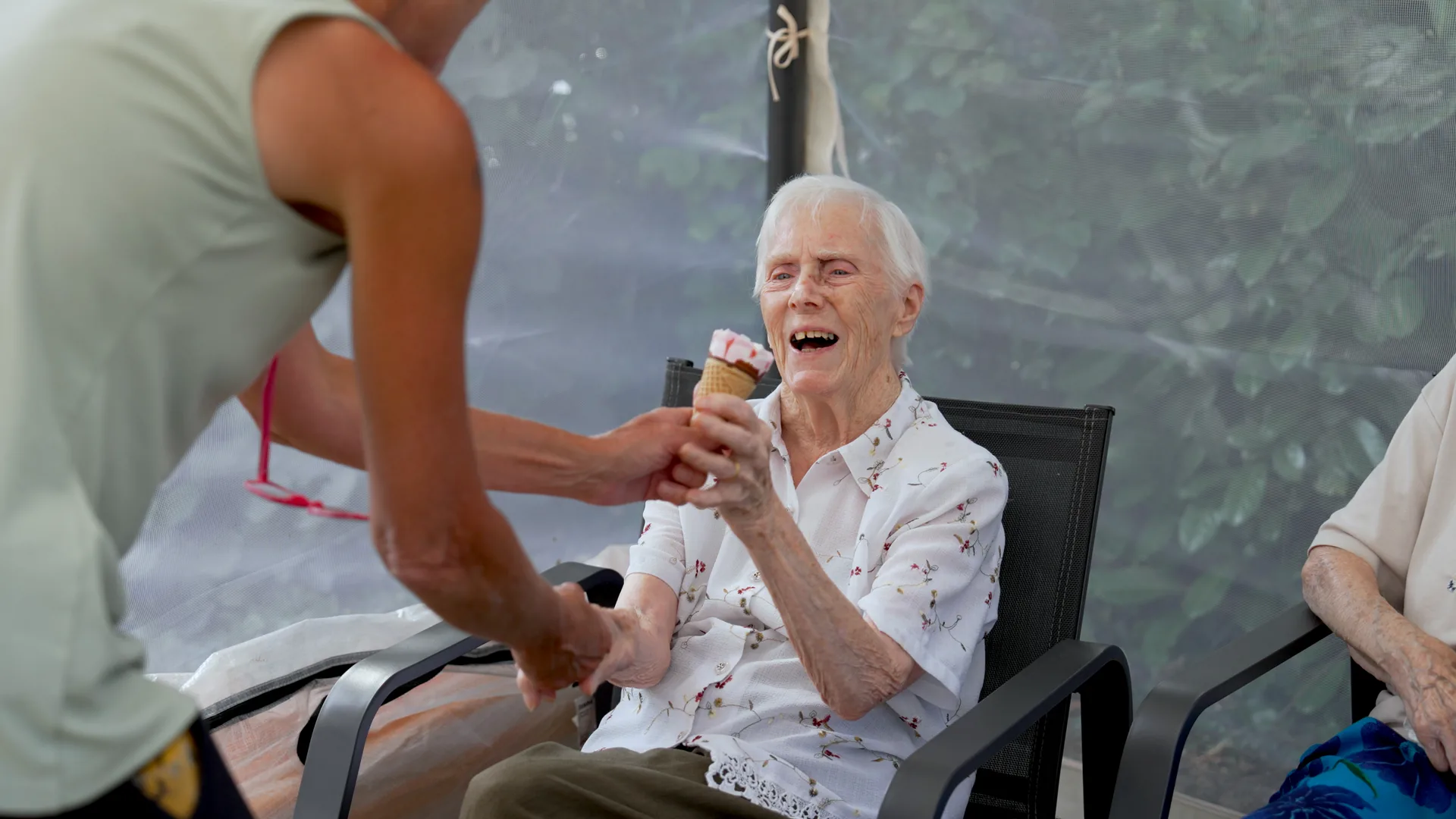
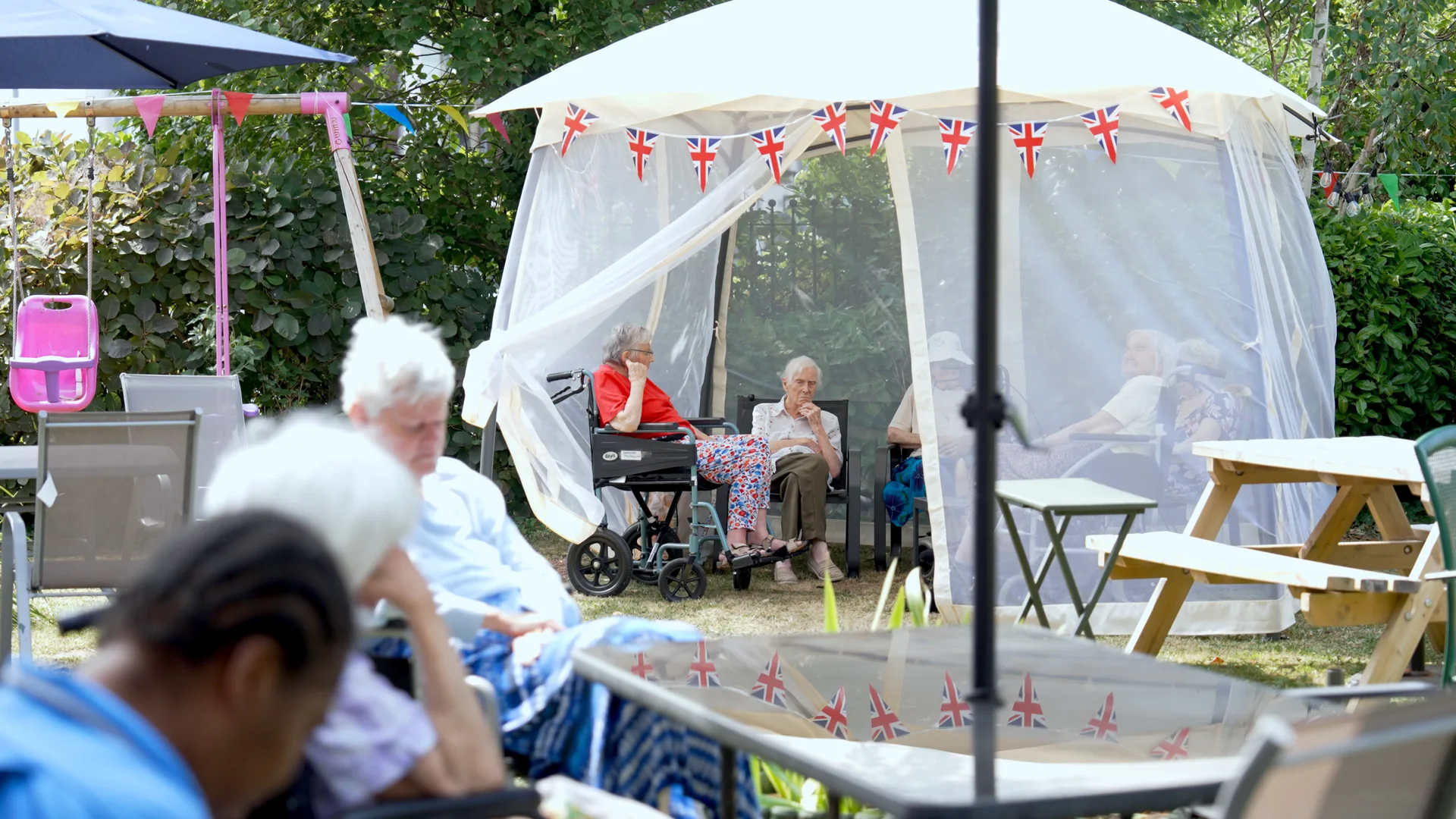
Capture the ordinary, because the ordinary is what families are trying to imagine. The moments that reassure are rarely the ones homes think to photograph: a carer crouching to talk at eye level, two residents who have become friends, the kitchen team who know exactly how Margaret takes her tea, the garden actually being used.
Activities help, but avoid only ever showing the big set pieces. A family seeing nothing but party photos will quietly wonder what the other 360 days look like. A simple test: would a relative who visits every week recognise your photos as the home they know? If your imagery looks like a hotel brochure, it is not doing its job.
Phones or film
Phone photos are enough to start, and starting matters more than polish. Both have a job, and they are different jobs.
Where professional film earns its place
Depth: sound, faces, story, and above all the family testimonial, a son or daughter explaining on camera what the move was like and how they feel now. That is the hardest thing to produce yourself, because it depends on trust and interview craft as much as cameras. Worth reading whether family testimonial films actually bring in enquiries.
Attention spans reward focus either way. Wistia's analysis of over 13 million videos found that videos under one minute hold roughly 52% average engagement, so short, genuine pieces work harder than long tours. One thing worth stating plainly: the people in your film must be real. AI-generated residents or voices are tone-deaf in this sector, and families can tell.
On the day
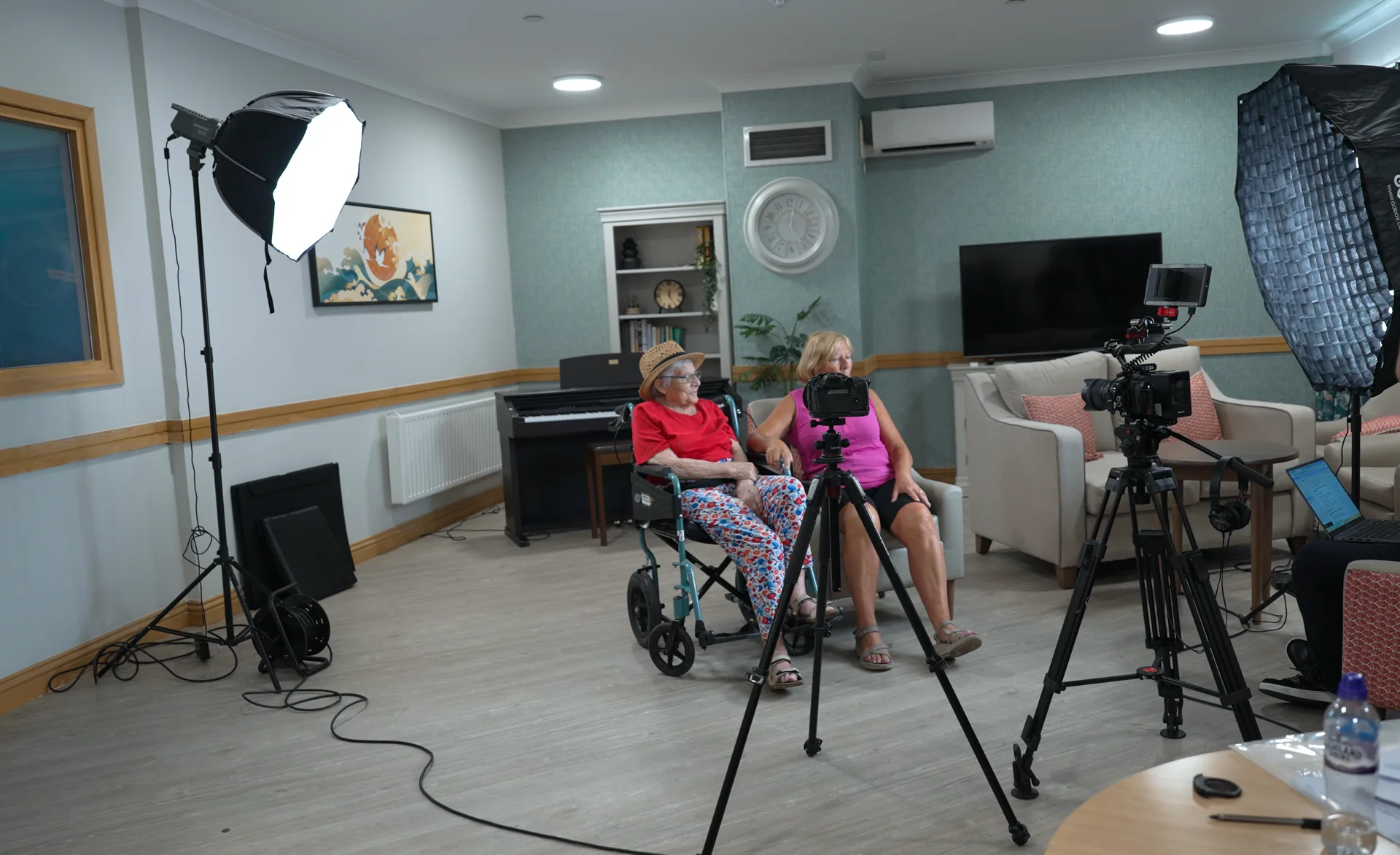
Fit around the home's rhythm rather than imposing on it. In our experience filming in working homes, the difference between a disruptive shoot and a good day is planning: a small crew, natural light, no staged scenes, and filming activities that were happening anyway.
Residents who do not want to appear are simply not filmed, and consent is gathered properly in writing beforehand, from the resident where they have capacity or from the person with authority where they do not. Dignity is not a constraint on good film. It is the point of it. Done well, most residents enjoy the day, and staff forget the camera is there within the hour, which is when the honest material arrives.
Where to begin
None of this requires a marketing department. It requires honesty and a small routine.
Search your home's name, open your website, profile and photos, and ask whether any of it shows life from the last month.
One named person, a few real moments a week, shared to your website news page, Google Business Profile and social pages, with consent handled once and properly.
Recent, specific reviews describing daily life are independent proof you cannot write yourself.
A family testimonial or a day-in-the-life piece, professionally made with consent and dignity handled, gives your website and adverts the material that carries decisions.
The reassurance this gives families compounds from the first week.
Common questions
Phone photos are enough to start, and a home sharing real weekly moments beats a home sharing nothing. Professional film adds what phones struggle with: sound, story and the confidence to put a real family on camera. Most homes do best with both, phones for regular updates and film for the moments that carry the biggest decisions.
Film around the home's rhythm, not against it. Small crews, natural light, no staged scenes, and filming during activities that were happening anyway. Residents who do not wish to appear are simply not filmed. Done properly, most residents enjoy the attention and the day feels like a nice event, not an intrusion.
Yes, always. Written consent from the resident where they have capacity, or from the person with authority to give it where they do not, before anything is shared. Consent should be specific about where the material will appear and easy to withdraw. A good production partner handles this as standard.
Families are not choosing a building, they are choosing the life their relative will live inside it. Warmth, staff who know residents by name, and genuine activity photograph well in any building. A dated lounge full of real life reassures more than an empty show suite.
Little and often beats rare and polished. A few real moments a week on your website news page, Google Business Profile and social channels keeps your online presence looking like a living home. A major piece of film once or twice a year then does the deeper work of carrying trust.
Keep reading
Why a real family's story earns trust faster than anything else a home can show.
Why families are not finding youThe visibility gaps that keep good homes invisible at the moment a family is searching.
What makes a great care home websiteHow a home's own site should carry daily life, reassurance and a clear path to enquire.